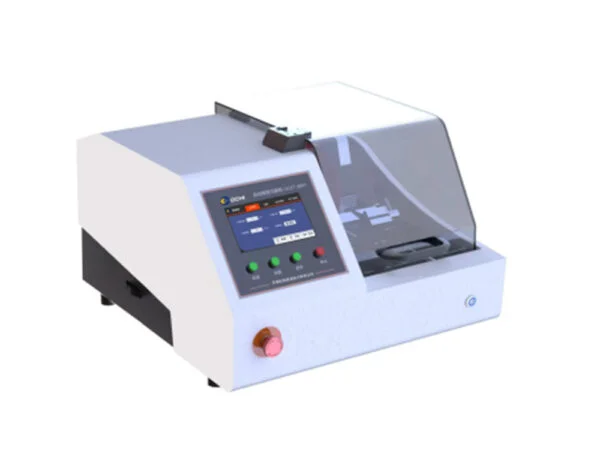
High-speed metallographic cutting machines are commonly used in the fields of materials science and metalworking. They utilize high-speed waterjet technology to perform precise cuts on metallic materials. This article provides a detailed introduction to the principles, types, and selection criteria for high-speed metallographic cutting machines.
I. Principles of High-Speed Metallographic Cutting Machines
High-speed metallographic cutting machines primarily use high-pressure pumps to accelerate water, air, or other media to extremely high speeds. This high-velocity stream is then ejected from a cutting nozzle, cutting metallic materials with immense kinetic energy. Their basic structure includes components such as a high-pressure pump, cutting head, control circuit, and drive mechanism. During the cutting process, the metal material is struck by the high-speed water jet and cut into the predetermined shape and dimensions.
II. Types of High-Speed Metallographic Cutting Machines
Depending on different application scenarios and requirements, high-speed metallographic cutting machines can be classified into several types. Common types of high-speed metallographic cutting machines are primarily categorized as follows: 1. Basic-type high-speed metallographic cutting machines: These machines feature a simple structure and are easy to operate, making them suitable for cutting general metal materials. However, they may fall slightly short in terms of precision and speed. 2. Professional-type high-speed metallographic cutting machines: Professional-type machines offer higher precision and faster cutting speeds, making them suitable for high-precision cutting requirements in scientific research and industrial production. 3. CNC-Type High-Speed Metallographic Cutting Machines: CNC-type high-speed metallographic cutting machines utilize CNC technology to achieve automated, high-precision, and high-speed cutting, making them suitable for mass production and high-precision metal processing.
III. Selecting a High-Speed Metallographic Cutting Machine
When selecting a high-speed metallographic cutting machine, users should choose the appropriate equipment based on their specific needs and application scenarios. Here are some recommendations for selection: 1. Define Requirements: First, clearly define your cutting needs, such as the type of material, thickness, and precision requirements. This will help you select the appropriate high-speed metallographic cutting machine. 2. Budget Considerations: Prices vary significantly among different models of high-speed metallographic cutting machines, so users should make their selection based on their budget. Choose equipment that offers the best value for money while meeting your requirements. 3. Reliability: Choose well-known brands and reputable suppliers to ensure equipment quality and long-term reliability. Additionally, pay attention to maintenance support and spare parts availability to facilitate timely maintenance and replacements. 4. Technical Specifications: Understand the technical specifications of different high-speed metallographic cutting machine models, such as maximum cutting thickness, maximum cutting speed, and nozzle types, to select the equipment that best meets your needs. 5. Ease of Operation: Consider the ease of operation, including the user interface and control methods. A simple user interface can improve work efficiency and reduce operational complexity. 6. Safety: Safety is a critical factor when selecting a high-speed metallographic cutting machine. Pay attention to the equipment’s safety protection features, operating procedures, and training requirements to ensure safe operation. In summary, when selecting a high-speed metallographic cutting machine, users should comprehensively evaluate multiple factors—including their specific needs, budget, reliability, technical specifications, ease of operation, and safety—to ensure they choose the most suitable equipment to meet their practical requirements.